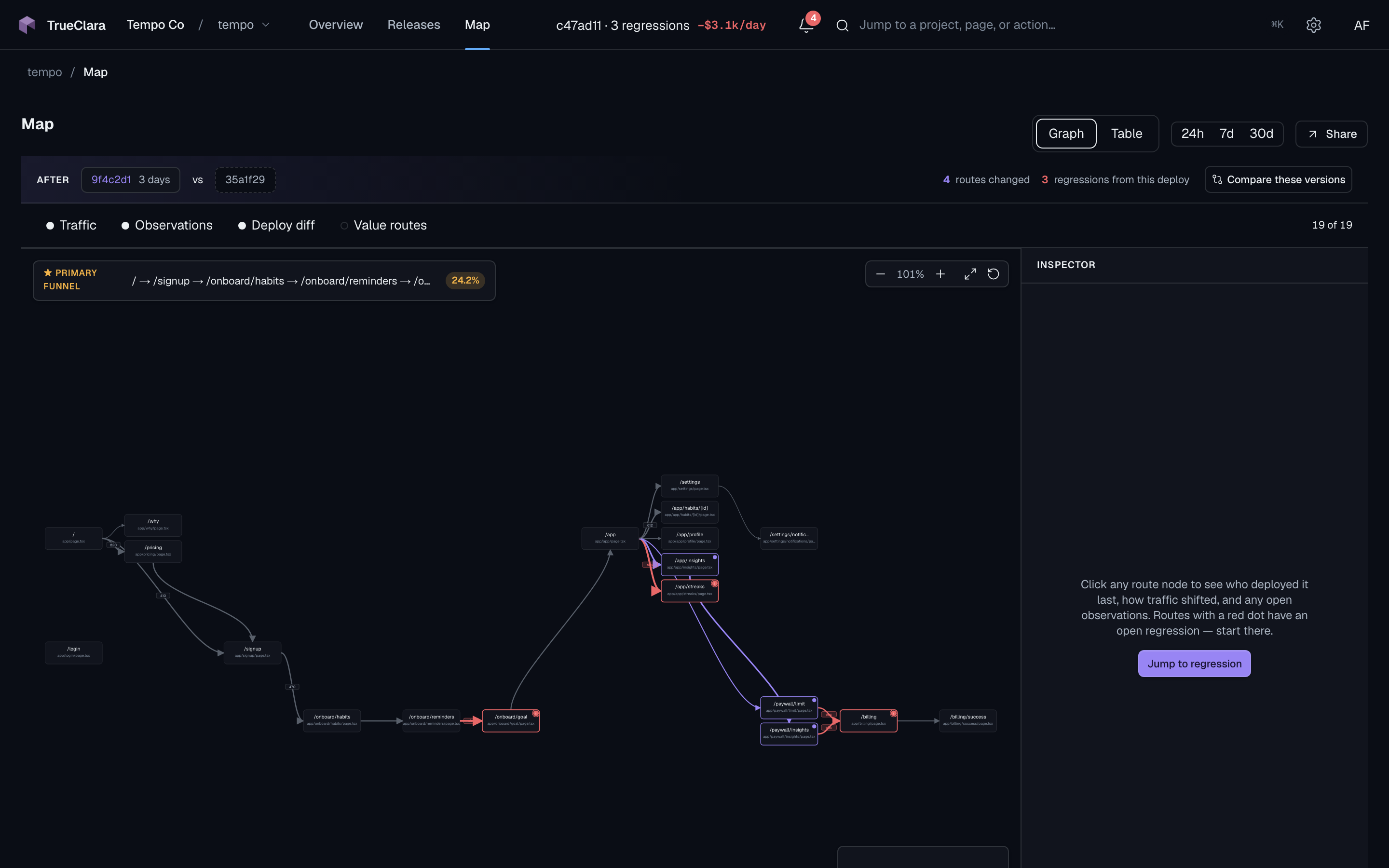
A value-route drop becomes dollars per day.
Manual revenue-per-conversion turns the measured value-reach delta into an estimated daily impact, so the alert starts with the business consequence.

TrueClara turns value-route regressions into deploy-attributed observations: estimated dollar impact, baseline/current rate, threshold state, sample size, and the deploy that caused it — commit SHA, PR, author, and graph snapshot — with full decision history.
Manual revenue-per-conversion turns the measured value-reach delta into an estimated daily impact, so the alert starts with the business consequence.
CUSUM compares route-level value reach during the deploy window against the baseline so small drifts can accumulate into a useful signal.
When /pricing to /signup drops, the observation names the broken edge instead of leaving a team to infer it from page views.
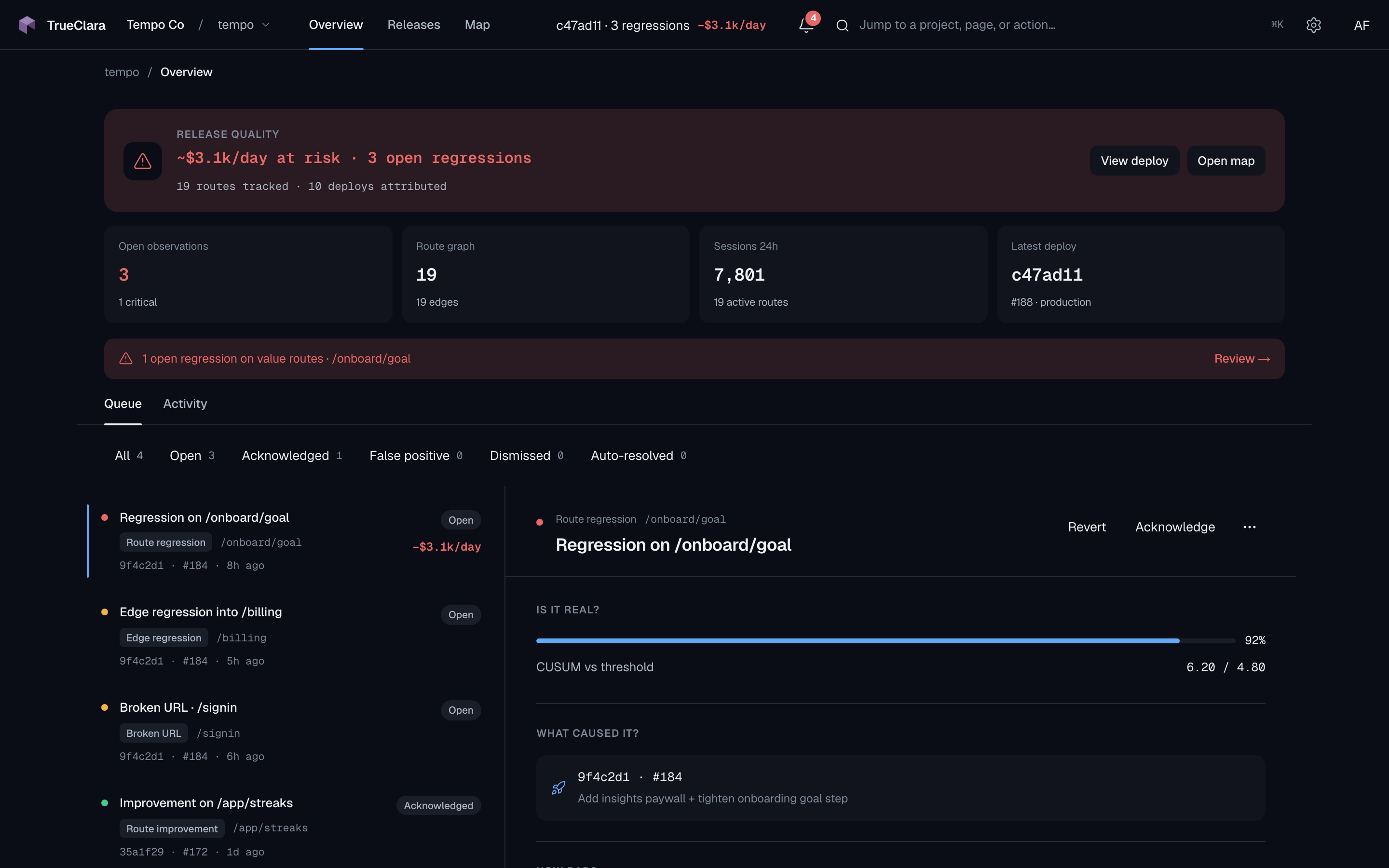
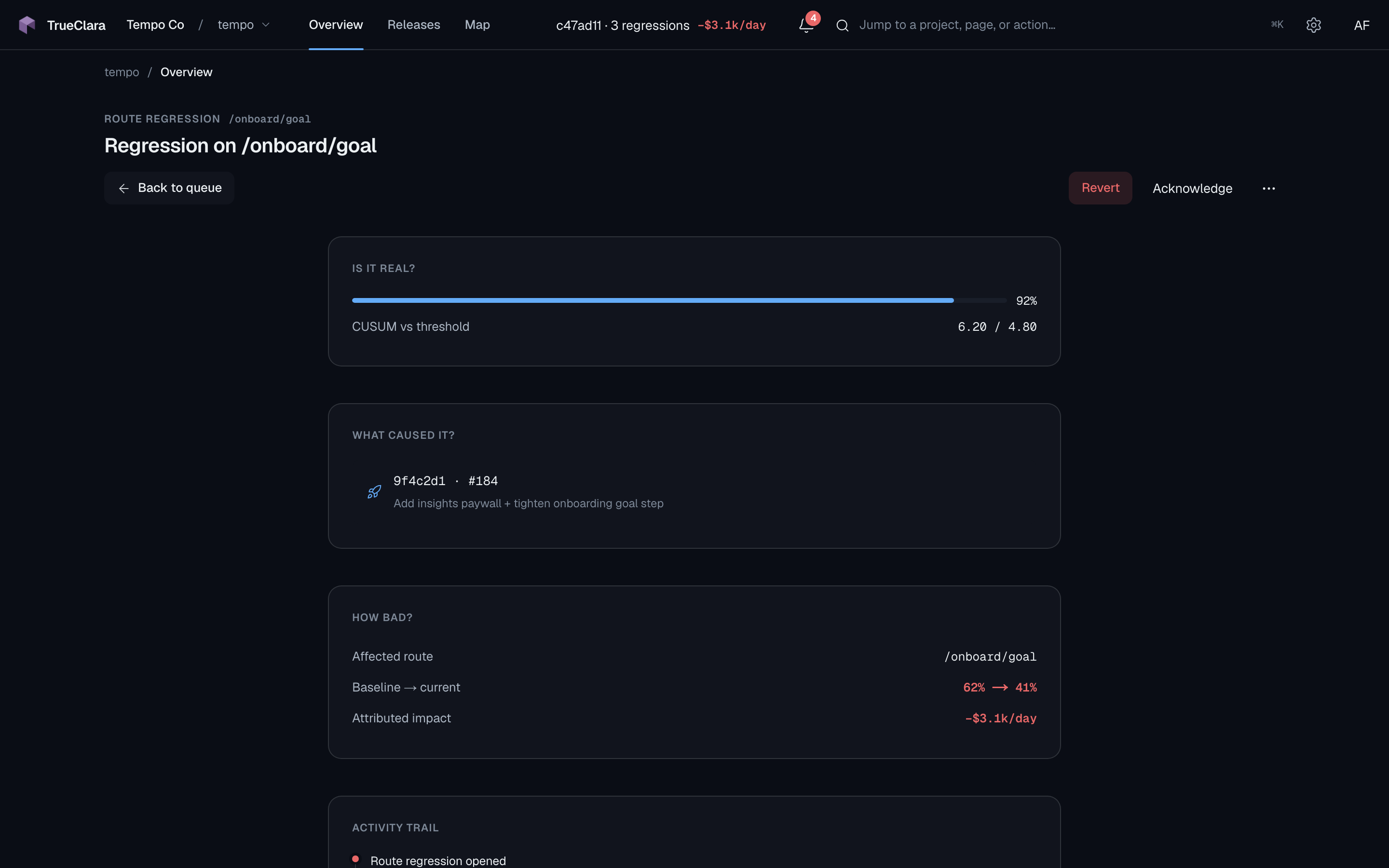
Manual revenue-per-conversion turns the measured value-reach delta into an estimated daily impact, so the alert starts with the business consequence.

CUSUM compares route-level value reach during the deploy window against the baseline so small drifts can accumulate into a useful signal.

When /pricing to /signup drops, the observation names the broken edge instead of leaving a team to infer it from page views.
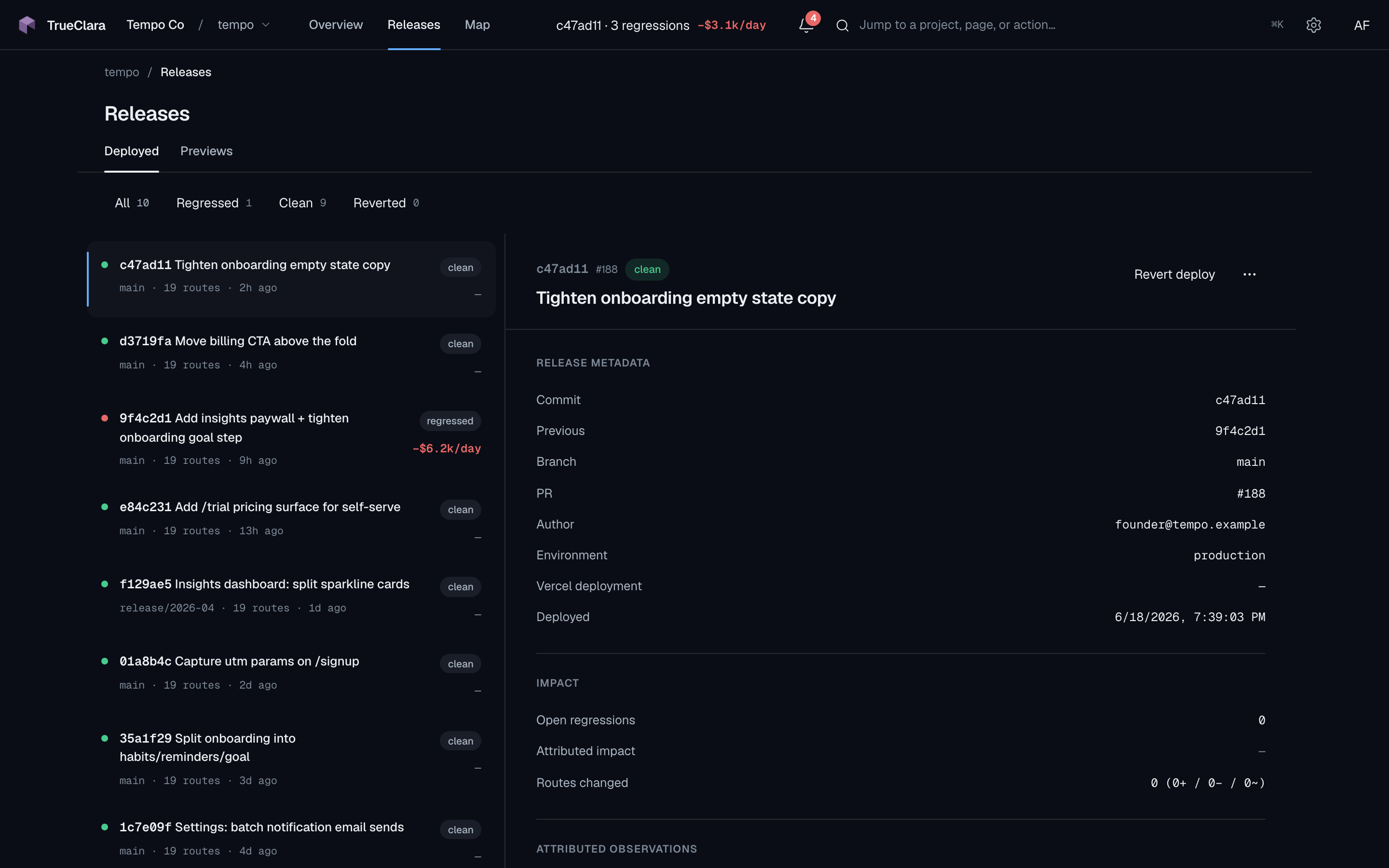
The observation can be accepted, resolved, ignored, or marked wrong with the evidence still attached for review.

The commit SHA, PR, author, environment, and versioned graph snapshot become the frame for the regression — so the team reads cause and ownership off the record instead of reconstructing it from deployment logs, and the deploy window is the comparison boundary.
CUSUM-detected regressions arrive with baseline, samples, and the responsible deploy attached — so the queue reads as decisions, not a wall of charts.
Use deploy-attributed observations so Slack receives decisions, not mysteries.
Curious how the detection actually works? Read the CUSUM change-point detection deep dive →